
Health and wellbeing at workSwitzerland
Boreout
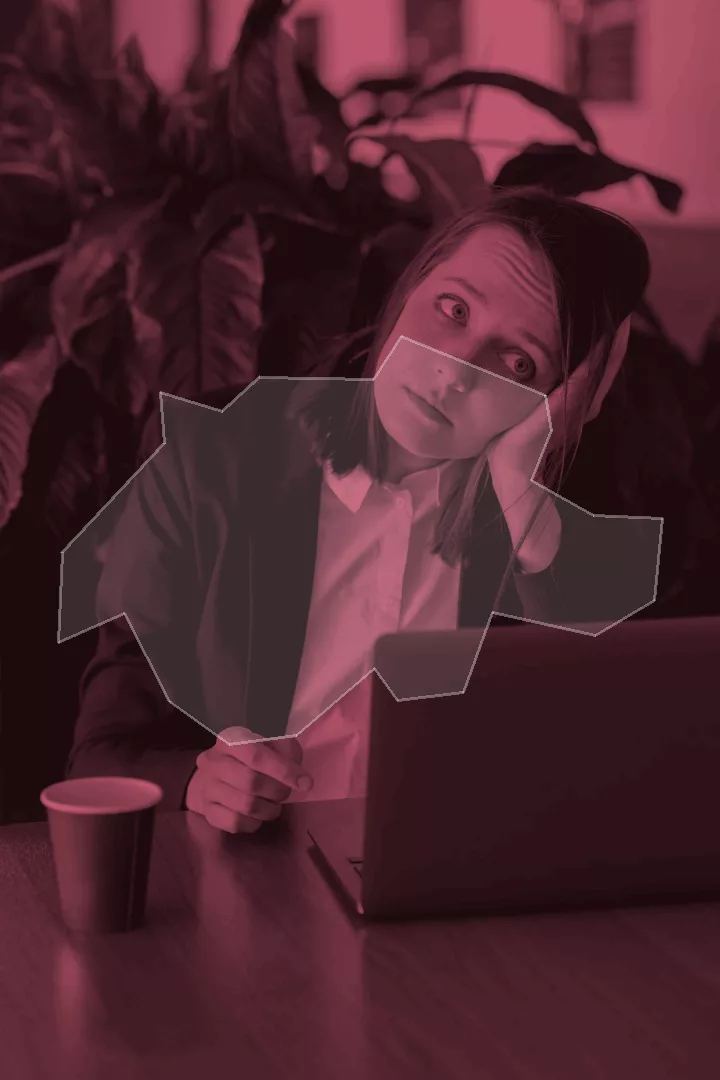
Underload, disinterest and boredom at work, hidden behind busy behaviour: the concept Swiss authors Philippe Rothlin and Peter R. Werder named in 2007.
- Type
- Concept by a business thinker
- Origin
- Philippe Rothlin and Peter R. Werder
- First documented
- 2007
- Spread
- 5 of 6, Studied
- Last reviewed
- 22 November 2026
In short
Boreout is a concept named by two Swiss authors, Philippe Rothlin and Peter R. Werder, in 2007. It describes underload, disinterest and boredom at work. Its defining sign, Werder says, is that people hide their idleness and act busy. The authors present it as the opposite of burnout. It is not a recognised medical diagnosis.
Where it comes from
Rothlin and Werder published Diagnose Boreout with Redline Wirtschaft in 2007 (Rothlin and Werder, 2007). Kogan Page released an English edition, Boreout!, in 2008 (Rothlin and Werder, 2008).
Publisher biographies describe Rothlin as a business strategy consultant with a banking career. They describe Werder as a doctor of philosophy and former journalist who moved into corporate communications (Rothlin and Werder, 2008).
The authors define boreout as the opposite of burnout (Rothlin and Werder, 2007).
- 2007Rothlin and Werder publish Diagnose Boreout
- 2008English edition Boreout! published by Kogan Page
- 2015Stock publishes a peer-reviewed study of boreout among frontline staff
- 2016Frédéric Desnard brings a bore-out case to Paris labour court
- 2020Paris Court of Appeal finds moral harassment in the Desnard case
- 2021French Work Bore-Out Scale published
- 2024Pronova BKK reports 11% bore-out experience among German staff
How it works
- Three elements. The authors define boreout as underload, disinterest and boredom at work: Unterforderung, Desinteresse und Langeweile (Rothlin and Werder, 2007).
- Concealment. Affected staff use behaviour strategies to appear busy. Werder says this effort to hide underwork is what separates boreout from simple boredom (Rothlin and Werder, 2007; Helbling, 2016).
- Named strategies. The book’s chapters name compression, flattening, strategic prevention, briefcase, pseudo-burnout and noise strategies (Rothlin and Werder, 2007).
- Visible signs. Werder lists arriving early, leaving late, hurrying through corridors and fidgeting as typical cover behaviours (Helbling, 2016).
- Not laziness. Werder says affected people want to work but are “made lazy” by their situation (Helbling, 2016).
- Manager’s role. Pronova BKK’s business psychologist Patrizia Thamm advises managers to watch for underload as well as overload in their teams (Pronova BKK, 2024).
Who uses it
Austria’s public employment service AMS describes boreout on a page for job seekers, updated in October 2026 (AMS, 2026).
German health insurer Techniker Krankenkasse covers boreout in its workplace health guidance for employers (Techniker Krankenkasse, 2026). Another insurer, Pronova BKK, measured bore-out experience in its 2023 staff survey (Pronova BKK, 2024).
In 2016, Frédéric Desnard, former head of general services at perfume firm Interparfums, took a bore-out case to a Paris labour court (AFP, 2016). On 2 June 2020, Paris Court of Appeal found moral harassment and declared his dismissal void (Chhum, 2020).
What the evidence says
Peer-reviewed research
Stock (2015) studied 142 frontline employees and their customers. She splits boreout into crisis of meaning, job boredom and crisis of growth.
In that study, crisis of meaning and crisis of growth both reduced innovative work behaviour. Job boredom had no significant effect (Stock, 2015).
Poirier, Gelin and Mikolajczak (2021) built and validated a French Work Bore-Out Scale with four dimensions. They note that few studies have evaluated bore-out.
Surveys and reports
Pronova BKK, a German health insurer, surveyed 1,204 employees online in November 2023. 11% reported a bore-out experience in the previous 12 months, and 17% of under-30s reported strong underload (Pronova BKK, 2024).
Official data and company documents
AMS states that boreout is not yet included in ICD, the common classification of medical diagnoses (AMS, 2026).
Press and practitioner accounts
Swiss psychotherapist Andi Zemp told Beobachter in 2016 that no prevalence figures exist, because boreout is not a diagnosis (Helbling, 2016).
Desnard told AFP in 2016 that he became depressed and felt ashamed to be paid for doing nothing (AFP, 2016).
Spread level 5 of 6
Studied. Described in peer-reviewed research or measured by surveys.
Limits
- No diagnosis. Boreout is absent from ICD, so it cannot be recorded as a medical condition (AMS, 2026).
- Thin evidence. Few studies have evaluated it, and researchers measure it with different dimensions (Poirier, Gelin and Mikolajczak, 2021; Stock, 2015).
- Hidden by design. Concealment is its defining sign, so managers may miss it (Helbling, 2016).
- Self-reported figures. Available survey figures come from online self-reports, without clinical assessment (Pronova BKK, 2024).
- Mixed results. Job boredom alone had no significant effect on innovative behaviour in Stock’s sample (Stock, 2015).
- No tested remedy. No peer-reviewed evaluation of an intervention against boreout was found for this entry.
Criticism
- Andi Zemp. The Swiss psychotherapist said in 2016 that boreout is not a medical diagnosis and does not appear in the specialist literature (Helbling, 2016).
- Einar Baldursson. The Aalborg University work psychologist said in 2007 that boreout was overstated and that burnout was the more typical problem (Meister, 2007).
- Interparfums’ lawyer. In the Desnard case, Jean-Philippe Benissan argued that the claim lacked evidence (AFP, 2016).
Would it work where you are? Free account
Free with an account
- Would it work where you are? On every practice, 4 conditions (law, culture, economics and organisation), each with a verdict
- Spread alerts when a practice moves up the spread scale
- Trendemic Weekly, the free email that recaps the practices of the week
The culture this practice needs
Nine cultural conditions decide whether Boreout can take root in an organisation. This profile shows the level each condition needs and which ones are critical.
Adoption toolkit Decide whether it can live in your organisation
- The cultural profile of this practice: the nine conditions it needs and the ones that are critical
- The assessment “Can this leadership practice live in your organisation?”
- A one-page decision note, a 90-day test plan and the objections to expect
- Comparisons between practices and a workshop deck
Adoption toolkit, €249 a year, includes Field Notes. One practice can also be unlocked for €49. Opening soon.
Frameworks. The Leading, Deciding, Evaluating and Disagreeing scales come from Erin Meyer, The Culture Map (PublicAffairs, 2014). The trust, risk-taking and openness elements come from Steve Gruenert and Todd Whitaker, School Culture Rewired (ASCD, 2015). The autonomy and cross-team cooperation conditions are by Benjamin Chaminade. The profile of this practice is an editorial assessment by Trendemic, based on the sources of this entry.
Sources
- Rothlin, P. and Werder, P. R. (2007). Diagnose Boreout: Warum Unterforderung im Job krank macht. Redline Wirtschaft. Reading sample: https://content.e-bookshelf.de/media/reading/L-2860584-43f88db31f.pdf
- Rothlin, P. and Werder, P. R. (2008). Boreout! Overcoming Workplace Demotivation. Kogan Page. https://www.schweitzer-online.de/en/buch/Rothlin/Boreout/9780749453398/A3438366/
- Helbling, J. (2016, 12 August). Langeweile, die krank macht. Beobachter. https://www.beobachter.ch/gesundheit/psychologie/boreout-langeweile-die-krank-macht
- Stock, R. M. (2015). Is boreout a threat to frontline employees’ innovative work behavior? Journal of Product Innovation Management, 32(4), 574-592. https://doi.org/10.1111/jpim.12239
- Poirier, Gelin and Mikolajczak (2021). Creation and validation of the first French scale for measuring bore-out in the workplace. Frontiers in Psychology, 12. https://doi.org/10.3389/fpsyg.2021.697972
- Pronova BKK (2024, 13 February). Deutschlands Arbeitnehmer*innen zwischen Burn-out und Bore-out. https://www.pronovabkk.de/unternehmen/presse/pressemitteilungen/pressemitteilungen-2024/deutschlands-arbeitnehmer-innen-zwischen-burn-out-und-bore-out.html
- AMS (2026). Boreout. Arbeitsmarktservice Österreich. https://www.ams.at/arbeitsuchende/topicliste/boreout
- Techniker Krankenkasse (2026). Boreout. Betriebliche Gesundheitsförderung. https://www.tk.de/firmenkunden/service/gesund-arbeiten/betriebliche-gesundheitsfoerderung/boreout-2047504
- Chhum, F. (2020, 14 June). Bore out : que dit l’arrêt de la Cour d’appel de Paris du 2 juin 2020. https://consultation.avocat.fr/blog/frederic-chhum/article-35469-bore-out-que-dit-l-arret-de-la-cour-d-appel-de-paris-du-2-juin-2020.html
- AFP (2016, 2 May). Un cas de placardisation ou « bore-out » devant les prud’hommes. Tendance Ouest. https://www.tendanceouest.com/actualite-137041-paris-afp-un-cas-de-placardisation-ou-bore-out-devant-les-prud-hommes
- Meister, M. (2007, 14 September). Kedsomhed på jobbet giver syge medarbejdere. Ingeniøren. https://ing.dk/artikel/kedsomhed-paa-jobbet-giver-syge-medarbejdere